AI QA for support teams: scoring every conversation, not a sample
Traditional QA samples a few percent of conversations, so most problems are never seen. AI-assisted QA scores every conversation against the same rubric (accuracy, tone, SOP compliance, resolution) and flags the ones a human should review. Quality stops being a spot check and becomes full coverage.
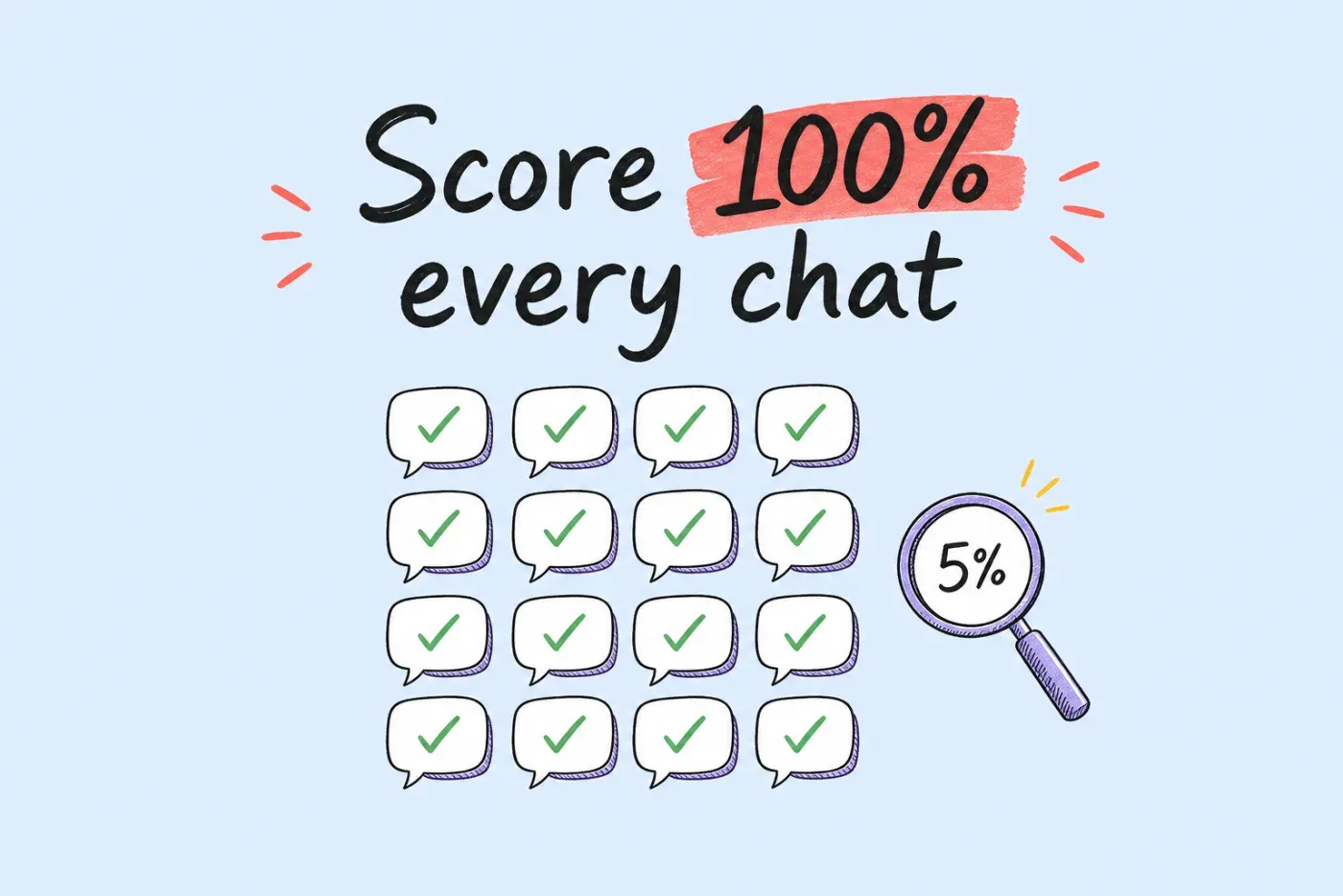
AI quality assurance scores every support conversation against a written rubric, instead of the small sample a human reviewer has time to check. Manual QA works the other way: a lead pulls a handful of tickets each week, so the vast majority of conversations are never checked, and the ones that go wrong are usually not in the sample. Same rubric, same standards; the difference is coverage, from a thin slice of tickets to all of them.
What does QA actually measure?
Good QA is not a vague sense of “was that a nice reply.” It scores each conversation against a written rubric with clear dimensions. A practical rubric covers four:
- Accuracy: was the information correct and complete?
- Tone: was it appropriate for the customer and the situation?
- SOP compliance: did the agent follow the process and policy?
- Resolution: was the customer’s actual problem solved?
Because the rubric is explicit, scores mean the same thing across agents, languages, and reviewers.
How does AI quality assurance change coverage?
Manual QA is limited by reviewer time, so teams sample a few percent of tickets. AI-assisted QA reads every conversation and scores it against the same rubric, which means a problem pattern shows up whether it happened in one ticket or a hundred. Instead of hoping the bad conversation was in this week’s sample, you see all of them.
A human reviewer still makes the calls. The AI’s job is triage: because it scores everything, it can surface the conversations that most need a reviewer’s attention, so the lead’s limited time goes to the tickets that actually matter.
What does full-coverage QA catch that sampling misses?
Two things, mainly. First, rare but serious failures (a wrong safety instruction, a mishandled complaint) that a small sample almost always overlooks. Second, slow drift: a macro that has gone slightly out of date, or a policy being applied inconsistently between languages. These patterns are invisible in a handful of tickets but obvious across the whole queue.
Does the customer see the scores?
They should, at least in aggregate. When you outsource support, QA scores are how you keep the operation from becoming a black box. A weekly report that shows how conversations scored on each rubric dimension turns quality into something the brand can see and question, rather than something it has to take on faith.
Making QA useful
- Score against an explicit rubric, so results are comparable.
- Cover every conversation, not a sample, so patterns and rare failures both surface.
- Use the scores to route human review to where it is needed.
- Report the scores to the brand, so quality stays visible.
QA is only worth doing if it changes what happens next. Full-coverage, rubric-based scoring shows you which problems to fix first, and gives the brand the numbers that back up the service.