Shopify Return Policy Setup Guide
A clear Shopify return policy sets expectations before purchase and cuts disputes after. Configure your return window, return rules, and self-serve returns in Shopify admin, then state your terms plainly on product and checkout pages.
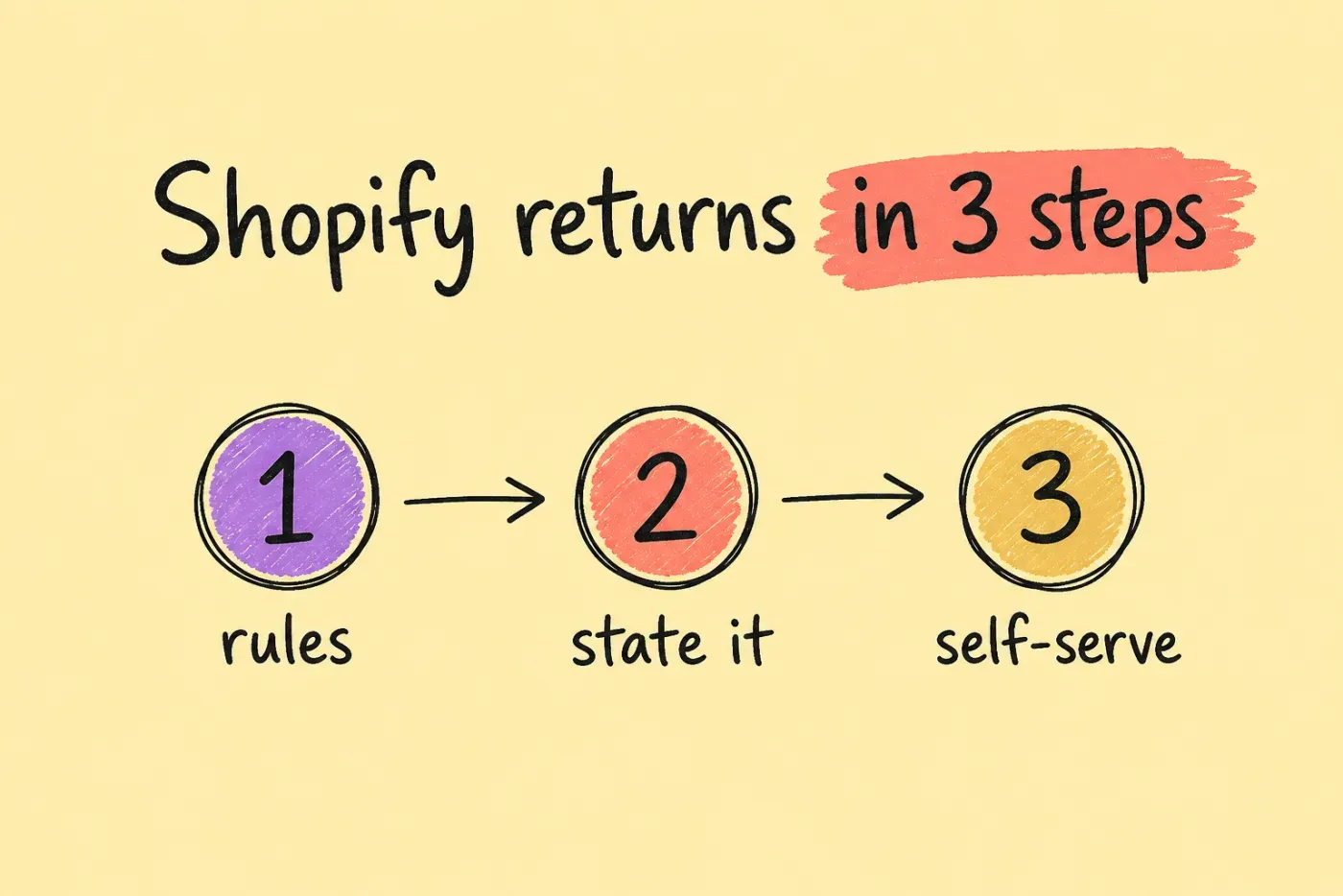
Platform policies change frequently. This reflects the rules as of early 2026. Always confirm against the platform’s current official policy.
To set up a Shopify return policy, you work in two places in admin: the Refund policy page (Settings → Policies), which holds the text customers see at checkout, and Return rules, which control the return window, shipping costs, and final-sale exclusions. Getting both right matters because a clear policy sets expectations before purchase and cuts disputes after. This guide covers the common settings and configurations.
1. What Should a Return Policy Include?
A complete return policy typically includes:
- Returnable Items: What can be returned vs. final sale (e.g., custom items, perishables).
- Conditions: State of the item (unopened, tags attached, etc.).
- Timeframe: Days to request a return after delivery (e.g., 14, 30 days).
- Process: How to initiate a return and where to ship it.
- Shipping Costs: Who pays for return shipping.
- Refund Method: Original payment method or store credit.
2. Where to Set Your Shopify Return Policy
Shopify admin gives you two main places:
1. Policy Pages (Text)
Path: Settings → Policies → Refund policy
This text appears at checkout and in the footer. Shopify offers a template, but customize it to match how you actually handle returns.
2. Return Rules (Functionality)
Path: Settings → Policies → Return rules
Here you configure the rules themselves:
- Return window (14, 30, 90 days, or custom)
- Return shipping cost (Free or customer pays)
- Final sale items or collections
📋 Self-Serve Returns
Shopify allows customers to request returns from their order status page. You need to enable “New customer accounts” to use this. It cuts support tickets significantly.
3. Common Configurations
Returnless Refunds for Low Value
For cheap items, return shipping can cost more than the product itself. Set a rule: for example, items under $10 get a refund without sending anything back.
Exceptions by Type
Items not suitable for return:
- Custom/Personalized products
- Opened hygiene products
- Digital downloads
- Perishables
Holiday Extensions
Many sellers extend the window during Q4: for example, purchases made in November and December can be returned until January 31. This requires a manual policy update.
4. Visibility
Make it easy to find:
- Footer navigation
- Product pages (especially high-ticket items)
- Cart and Checkout
- FAQ page
5. Tips
- Simple Language: Avoid legalese.
- Clear Format: Use bullet points.
- Regular Audit: Make sure the written policy matches what your team actually does.
- Local Laws: Respect regulations (e.g., EU 14-day right of withdrawal).
The best policy isn’t the strictest or the loosest; it’s the one that’s clear and executable.