Amazon Return Policy Updates for Sellers (2025-2026)
Amazon's 2025–2026 changes hit FBA reimbursement rules, returns processing fees, and FBM refund timelines. Sellers should re-check their reimbursement claims and update refund SLAs now, or risk silent margin loss on every return.
Platform policies change frequently. This reflects the rules as of early 2026. Always confirm against the platform’s current official policy.
The Amazon return policy for sellers changed in three major ways for 2025-2026. FBA inventory lost or damaged before a customer order is now reimbursed at the product’s procurement cost instead of retail price (effective March 31, 2025). Returns processing fees extend to apparel, footwear, and fashion accessories starting in 2026. And FBM refund processing moves from 2 business days to 4 calendar days on January 26, 2026. Each change hits daily operations and margins, so here is what to update and when.
1. FBA Inventory Reimbursement Policy Changes
Effective March 31, 2025
Changes to FBA inventory lost/damaged reimbursement: For items lost or damaged in the warehouse prior to a customer order, Amazon will reimburse based on the product’s procurement cost rather than the retail price. Sellers can submit their cost data in the “Inventory Defects and Reimbursements” portal.
Key points:
- If cost data is not provided, Amazon will estimate based on similar products.
- Items lost after a customer order will still be reimbursed based on sales price minus fees.
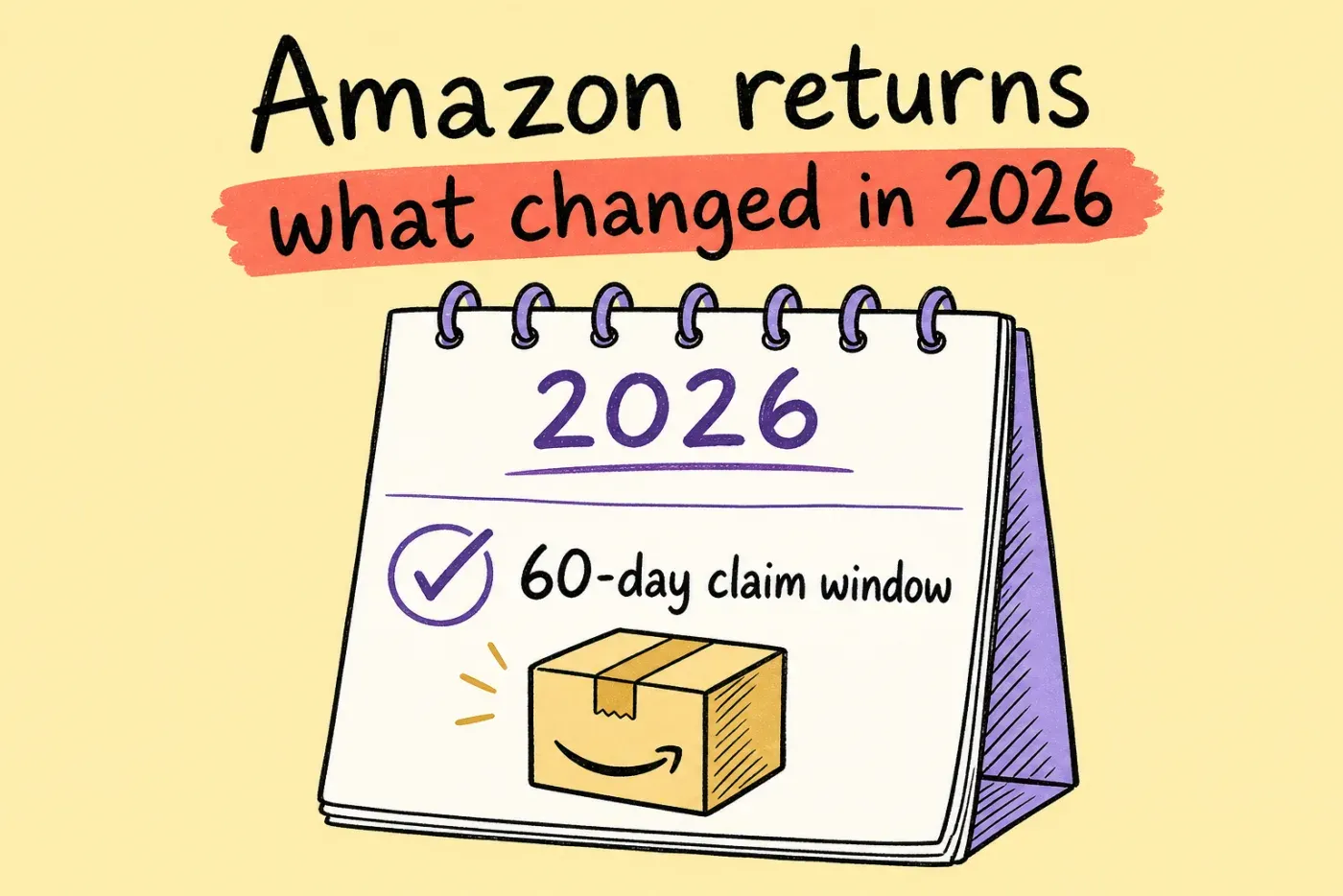
- Claim window shortened to 60 days; overdue claims will not be accepted.
2. Returns Processing Fee Changes
Fees for High Return Rate Products
Starting June 2024, Amazon charges an additional returns processing fee for products (excluding apparel/shoes) with return rates exceeding the category threshold.
⚠️ 2026 Apparel Category Changes
Starting in 2026, apparel, footwear, and fashion accessories will also be subject to returns processing fees. For these categories, every returned item may incur a fee, not just those exceeding a threshold.
FBM Refund Processing Extension
Starting January 26, 2026, the refund processing time for FBM orders is extended from 2 business days to 4 calendar days after receiving the return, which gives sellers more time to inspect items. Miss that window, though, and Amazon may issue an automatic refund.
3. New Features for Sellers
📋 Custom Returnless Refund Rules
Sellers can now set more flexible returnless refund rules in Seller Central, including:
- By price range (e.g., direct refund without return for items under $10)
- By product category
- By return reason
- By return window
This helps sellers save on reverse logistics costs for low-value items.
4. Holiday Return Window
Amazon extends the return window during the holiday season:
- Items purchased between November 1 and December 31, 2025
- Can be returned until January 31, 2026
Staff your customer service team ahead of the post-holiday return peak.
5. FBA Prep Service Termination (US)
Starting January 1, 2026, Amazon will discontinue FBA Prep & Labeling services in the US. This means:
- Sellers must handle packaging, labeling, bagging, bundling, and similar prep work themselves.
- Or find a third-party service provider to handle it.
6. How the New Amazon Return Policy for Sellers Affects CS Teams
Each of these changes lands on the support desk:
- Faster response: The FBM refund window is now 4 days, but slow processing still triggers auto-refunds.
- Cost data management: Coordinate with operations to keep product cost data current in the reimbursement portal.
- Holiday scheduling: Lock in January staffing for return handling before the wave hits.
- Rule familiarity: CS agents need to know the conditions for returnless refunds.
Policies change constantly. Check official notifications in Amazon Seller Central regularly. This article is for reference only.
Conclusion
Policy churn is the norm on Amazon. Put return policy on your quarterly review calendar: re-check reimbursement claims, refund SLAs, and returnless refund rules every time Seller Central posts an update, before the changes show up as margin loss.